How to Improve Hospital Hygiene Management in 2026?

Time:2026-10-01 Author:Oliver
0%

Hospital hygiene management in 2026 will demand more than routine cleaning schedules and visible inspections. Hospitals must connect infection prevention, staff behavior, digital monitoring, and patient safety in one practical system. A clean corridor is important, but it does not prove that high-touch surfaces are safe. Bed rails, elevator buttons, privacy curtains, and mobile workstations need consistent attention. Small gaps can create serious risks.

So, what are the key factors in hospital hygiene management? Effective answers include evidence-based cleaning protocols, reliable hand hygiene, appropriate disinfectant use, staff training, and regular performance audits. Technology can support this work through sensor alerts, electronic checklists, and environmental monitoring. However, technology cannot replace professional judgment. A sensor may report that a room was cleaned, yet it may not confirm whether the correct contact time was followed.

Experience from healthcare environments shows that simple systems are often used more consistently. Clear color-coded tools, accessible sanitizer points, and short refresher sessions can improve daily practice. Leaders should also encourage honest reporting when procedures fail. That feedback is valuable. It exposes weaknesses before they affect patients. Still, no hygiene program is perfect. Staff shortages, rushed transfers, and unclear responsibilities can undermine strong policies. Hospital managers should review real working conditions, not rely only on written plans. In 2026, safer hygiene management will depend on measurable standards, accountable leadership, and continuous learning. The goal is practical reliability.
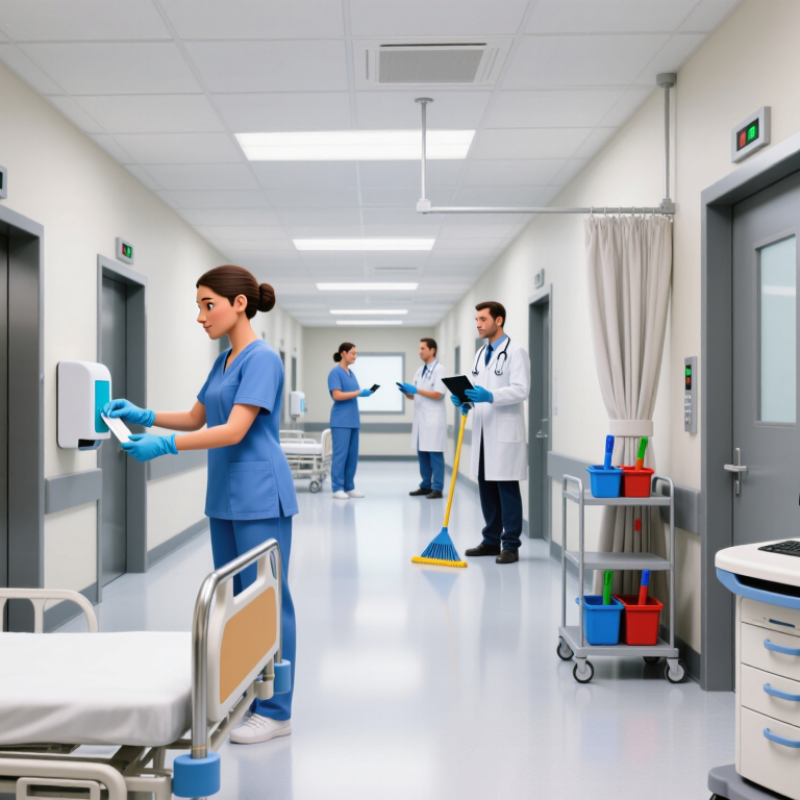
How to Improve Hospital Hygiene Management in 2026?

Defining Hospital Hygiene Management and Its 2026 Objectives

Hospital hygiene management is the coordinated control of cleanliness, hand hygiene, disinfection, waste, water, air, and staff practices. It is broader than wiping surfaces. It protects patients, workers, and visitors during every care process.

The WHO Global Report on Infection Prevention and Control (2022) estimates that 7% of acute-care patients in high-income countries acquire at least one healthcare-associated infection. The estimate rises to 15% in low- and middle-income countries. Its 2026 objective should be measurable prevention, not attractive paperwork. Hospitals need ward-level surveillance, trained cleaning teams, reliable water, safer ventilation, and rapid feedback after hygiene failures. The ECDC’s point-prevalence data also show why local measurement matters: infection risks differ between intensive care, surgery, and long-term care. One checklist cannot fit every ward. That is often overlooked.

Tips

Place alcohol hand-rub at the bed entrance. Audit five moments of hand hygiene during real shifts. Record missed cleaning points, not only completed tasks. Use fluorescent markers on high-touch surfaces, then review results with staff. Set monthly targets for compliance, isolation-room cleaning, and response time. Keep reports readable. A dashboard can still lie when staff fear reporting. Patient feedback should influence the next audit, although it may be inconsistent. Review ventilation complaints after renovations. Hygiene management in 2026 should connect daily observations with infection data, antimicrobial-resistance risks, and accountable clinical leadership. (Sources: WHO, Global Report on Infection Prevention and Control, 2022; ECDC, Point Prevalence Survey of Healthcare-Associated Infections and Antimicrobial Use in European Acute Care Hospitals, 2022–2023.)

Assessing Infection Risks Across Hospital Departments

How to Improve Hospital Hygiene Management in 2026?

Assessing infection risk by department is more effective than applying one hygiene checklist everywhere. The World Health Organization reported that about 7% of patients in high-income acute-care hospitals acquire at least one healthcare-associated infection. In lower-income settings, the estimate reaches 15%. These figures should change how hospitals allocate cleaning time, training, and surveillance.

Intensive care units require the closest attention. Ventilator tubing, central lines, bed rails, and shared monitors create repeated contact points. Operating rooms need strict control of airflow, instrument handling, and staff movement. In emergency departments, crowded waiting areas and rapid patient turnover increase respiratory and contact risks. Dialysis units also deserve separate review because patients receive frequent invasive access. Risk is not evenly distributed.

The European Centre for Disease Prevention and Control reported a 7.1% healthcare-associated infection prevalence in European acute-care hospitals during its 2022–2023 survey. Local audits should connect such evidence with visible conditions: a damp sink edge, an overfilled waste bin, or gloves worn between patients. Small failures matter. Yet audits are not perfect. Staff may clean differently when observed, and underreporting remains possible. Hospitals should combine direct observation, environmental cultures when clinically justified, hand-hygiene compliance, and department-level infection trends. A monthly risk map can reveal where prevention is failing before infection rates rise.

Implementing Standardized Cleaning and Disinfection Procedures

Hospital hygiene in 2026 depends on consistent cleaning and disinfection procedures, not occasional deep cleaning. Each area should have a written schedule based on infection risk, patient movement, and surface use. Staff should clean from less contaminated areas toward more contaminated ones. High-touch points, such as bed rails, door handles, call buttons, and treatment tables, need frequent attention.

Every procedure should state the approved product type, dilution, application method, and required contact time. Staff must follow the contact time, even during busy shifts. Personal protective equipment should match the task and be changed when contaminated. Supervisors can use simple checklists, fluorescent markers, and room audits to verify performance. Records should include the room, date, time, staff member, and corrective action. Small gaps matter.

In practice, compliance is rarely perfect. A rushed shift may leave a disinfectant on the surface for too little time. One unclear instruction can create different habits across departments. Hospitals should review near-misses without blaming workers, then revise training and procedures. Short demonstrations are often more effective than annual lectures. New staff need supervised practice before working alone.

Tips: Keep cleaning tools separated by zone. Label prepared solutions clearly. Store equipment dry and off the floor. Check contact times at the point of use. Ask staff which steps are difficult; their answers may reveal weaknesses in the standard procedure.

Using Technology to Monitor Hygiene Compliance and Staff Training

In 2026, hospital hygiene management should connect daily practice with visible, usable data. Digital monitoring can record hand hygiene, cleaning schedules, equipment disinfection, and missed tasks. Simple sensors or scan points can mark when a room was cleaned. Supervisors can review time stamps before each ward round. However, a digital record is not proof of safe practice. People may scan without cleaning. That weakness matters.

Effective systems combine automated checks with direct observation. Trained infection prevention staff should compare dashboard results with spot audits and patient-area inspections. Training platforms can assign short lessons after a missed step. Staff might watch a two-minute demonstration, answer three questions, and repeat the task correctly. Use local examples, such as a contaminated bedside rail or an overflowing waste container. Keep records of completion, assessment scores, and follow-up coaching. Training must be practical.

Reliable implementation requires clear roles and protected data. Only authorized supervisors should view individual performance records. Reports should show patterns by ward, shift, and task, rather than shame workers. Leaders can set weekly review meetings and document the action taken. Technology also needs testing. False alerts, broken scanners, and poor network access can distort results. Staff feedback should shape revisions, even when it challenges the original plan. An honest system shows both improvement and uncertainty.

How to Improve Hospital Hygiene Management in 2026? - Using Technology to Monitor Hygiene Compliance and Staff Training

Monitoring Dimension Definition / Data Source Q1 2026 Q2 2026 Q3 2026 Q4 2026 2026 Target
Hand Hygiene Compliance Direct observation and electronic dispenser-event monitoring; percentage of correctly completed opportunities 78% 82% 86% 89% ≥ 85%
Alcohol-Based Hand Rub Availability Automated inventory checks; dispensers operational and stocked at the time of inspection 91% 94% 96% 97% ≥ 95%
Environmental Cleaning Pass Rate Digital checklist and fluorescent-marker verification; rooms meeting all required cleaning criteria 83% 87% 90% 92% ≥ 90%
Staff Training Completion Learning-management-system records; staff completing required annual infection-prevention modules 88% 93% 96% 98% ≥ 95%
Competency Assessment Pass Rate Observed skills assessment after training; staff correctly demonstrating hand hygiene and PPE procedures 81% 86% 90% 93% ≥ 90%
Corrective Action Closure Incident-management records; hygiene-related findings closed within 30 calendar days 69% 76% 84% 91% ≥ 90%
Hygiene Audit Reporting Timeliness Digital audit platform records; completed audit reports submitted within 48 hours 74% 82% 89% 94% ≥ 90%
Hygiene-Related Healthcare-Associated Infection Rate Infection surveillance records; qualifying infections per 1,000 patient-days 3.1 2.8 2.5 2.3 ≤ 2.5
Median Response Time to Alerts Electronic alert logs; median time from a hygiene exception alert to acknowledgement by the responsible team 18 min 14 min 11 min 9 min ≤ 10 min
Measurement note: Percentages represent quarterly compliance rates; infection rates are expressed per 1,000 patient-days. Data fields reflect commonly used hospital infection-prevention, environmental-cleaning, workforce-training, and digital-audit indicators. Local definitions, sampling methods, and reporting thresholds should be validated before operational use.

Measuring Outcomes and Continuously Improving Hygiene Performance

Hospital hygiene improves when teams measure daily behavior, not just infection figures. A practical dashboard can track hand hygiene compliance, cleaning completion, missed surfaces, and response times. Each measure should have a clear owner and review date. Numbers need context. A low compliance score may reflect overcrowded rooms, missing supplies, or rushed transfers. Staff interviews can explain what the dashboard cannot.

In practice, direct observation reveals small failures. A dispenser may sit behind a trolley. A cleaned bed rail may become contaminated during equipment movement. Auditors should record location, shift, task, and contributing conditions. Short feedback sessions work better than delayed criticism. Staff can review results beside the ward entrance, while details remain fresh. Privacy matters, and reports should focus on systems rather than blame.

Continuous improvement needs repeated testing. After relocating dispensers, compare compliance for four weeks. After revising cleaning checklists, inspect high-touch areas under consistent lighting. Some changes will fail. That is useful evidence. Our early audits may also be incomplete, especially during busy night shifts. Teams should acknowledge these gaps and adjust sampling times. Monthly reviews can combine laboratory trends, patient comments, staff observations, and supply records. When performance falls, leaders need to act visibly: repair equipment, refresh training, and recheck the same measure soon. Small corrections become credible only when results are measured again.

FAQS

Why should hospitals assess infection risk by department?

Infection risks differ between intensive care, operating rooms, emergency areas, and dialysis units. Risk is uneven. Department-level reviews help direct cleaning time, training, and surveillance more wisely.

Which hospital areas usually need the closest hygiene attention?

Intensive care units need close monitoring because ventilator tubing, central lines, bed rails, and shared monitors create repeated contact points. Operating rooms require controlled airflow, careful instrument handling, and limited staff movement.

What makes emergency departments especially challenging?

Crowded waiting areas and rapid patient turnover increase respiratory and contact risks. A damp sink edge or overfilled waste bin can reveal wider control problems. Small failures matter.

How can hospitals identify hygiene problems before infection rates increase?

Create a monthly risk map using hand-hygiene results, cleaning records, observations, and department infection trends. Add environmental testing when clinically justified. The picture may still be incomplete.

Can digital monitoring prove that cleaning was completed safely?

No. A scan or digital timestamp only shows that someone recorded an action. People may scan without cleaning. Supervisors should compare digital records with spot audits and room inspections.

What should practical hygiene training include?

Training should use short demonstrations, simple questions, and realistic local examples. Staff might clean a bedside rail, then repeat the task correctly. Keep completion records and provide follow-up coaching.

How should hospitals use hygiene performance data?

Track hand-hygiene compliance, cleaning completion, missed surfaces, and response times. Assign an owner and review date for every measure. Numbers need context.

What can hospitals do when compliance scores fall?

Investigate overcrowding, missing supplies, rushed transfers, and poorly placed dispensers. Repair equipment, refresh training, and recheck the same measure soon. Some changes will fail. That is useful evidence.

How can audits become more reliable?

Combine direct observation, staff interviews, environmental findings, and supply records. Change sampling times because busy night shifts may be missed. Staff may behave differently when observed, so audit results need caution.

Conclusion

Improving hospital hygiene management in 2026 requires a coordinated system that protects patients, staff, and visitors from preventable infections. The process begins by defining clear hygiene objectives, such as reducing healthcare-associated infections, strengthening accountability, and maintaining consistent standards across all departments. Hospitals should assess infection risks in areas with different levels of exposure, including surgical units, intensive care, laboratories, isolation rooms, and public spaces. This assessment helps teams set appropriate cleaning frequencies, select suitable disinfection methods, and prioritize high-risk surfaces and equipment.

What are the key factors in hospital hygiene management? They include standardized procedures, properly trained staff, reliable supplies, clear documentation, and continuous monitoring. Technology can support real-time inspections, digital checklists, training records, and compliance reporting. By measuring infection trends, audit results, staff performance, and patient feedback, hospitals can identify weaknesses and improve their practices. Regular reviews, targeted retraining, and evidence-based adjustments ensure that hygiene performance continues to develop as healthcare needs and risks change.

Oliver

Oliver

Oliver is a seasoned marketing professional with a wealth of expertise in driving brand awareness and engagement. With a deep understanding of our company's product offerings, he consistently delivers high-quality content that enriches our professional blog. His insights not only shed light on......