What Makes a Medical Product Safe for Hospitals?

Time:2026-09-26 Author:Isabella
0%

What makes a medical product safe for hospitals is not a single certificate or a reassuring label. Safety depends on how reliably a device performs, how clearly staff can use it, and how well it fits the hospital’s everyday workflow. A monitor may pass inspection yet still create risk if its alarm is difficult to hear beside a ventilator. Small details matter.

The World Health Organization’s 2023 patient-safety fact sheet estimates that about one in ten patients is harmed during health care, with more than three million deaths annually linked to unsafe care in hospitals. These figures cover many causes, not medical products alone. Still, they show why product design, maintenance, training, and incident reporting deserve close attention. WHO Director-General Dr. Tedros Adhanom Ghebreyesus stated, “No one should be harmed while receiving health care.” His words set a demanding standard for every device brought into a clinical setting.

ECRI’s annual health technology hazard reports offer another practical reference for hospital leaders assessing technology-related risks. A sound evaluation should examine evidence from testing and real-world use, foreseeable misuse, cleaning requirements, software updates, and the availability of repairs. FDA post-market reporting can also reveal potential problems, though reports do not prove that a product caused an injury. That distinction matters. No checklist can remove every uncertainty, and hospitals sometimes discover usability problems only after equipment reaches a busy ward. A credible safety process keeps asking questions, records concerns, and acts on new evidence. This is the standard behind what makes a medical product safe for hospitals.
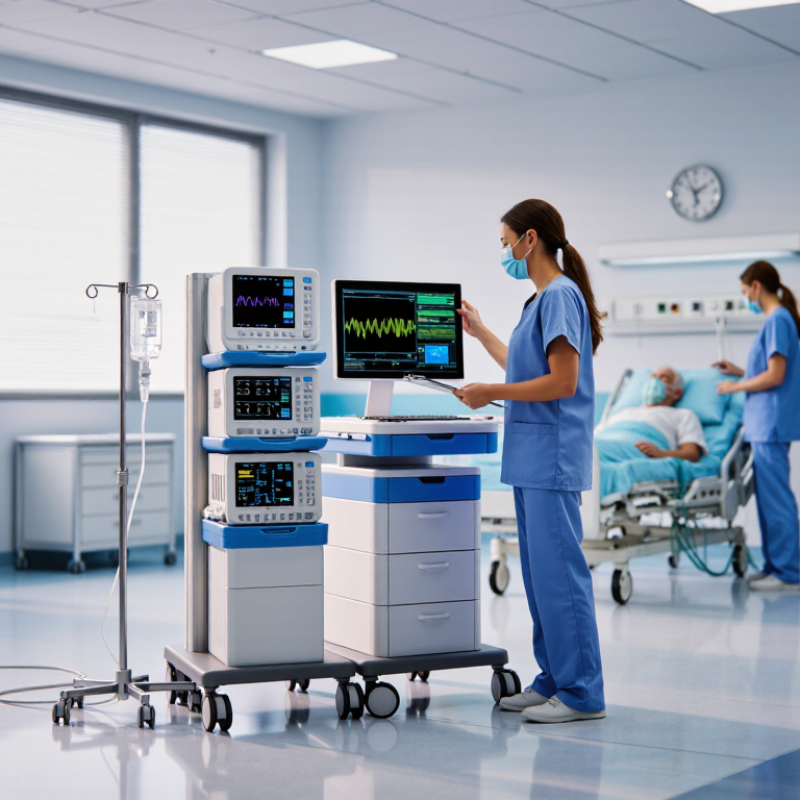
What Makes a Medical Product Safe for Hospitals?

Defining Safety Requirements for Hospital Medical Products

What Makes a Medical Product Safe for Hospitals?

Defining safety requirements begins with the actual work a product must perform. A monitor beside a crowded bed needs readable alarms, stable connections, and controls staff can use with gloved hands. Safety also depends on reliable cleaning, clear instructions, suitable materials, and maintenance that fits hospital routines. A device may pass technical tests and still create risk if staff misunderstand an alarm or cannot reach its power switch.

The World Health Organization’s Global Patient Safety Report 2024 estimates that one in ten patients experiences harm during care, with more than half of that harm preventable.

ECRI’s 2024 Top 10 Health Technology Hazards report highlights risks linked to technology use and clinical workflows. These findings support practical checks before purchase: assess usability, infection-control needs, software and cybersecurity risks, and compatibility with existing equipment.

Test products in realistic settings, not just quiet demonstration rooms. Watch a nurse clean the device, move it between beds, and respond to alerts during a busy shift.

No checklist catches every context. That limitation deserves attention. Record problems after deployment, review near misses, and update training and procedures as evidence changes.

Identifying and Assessing Risks Across the Product Lifecycle

What Makes a Medical Product Safe for Hospitals?
Identifying and Assessing Risks Across the Product Lifecycle

Safety starts with the product’s intended use, not just its final inspection. Teams should identify who will use it, where it will operate, and what could go wrong. A cable crossing a busy treatment room, for example, may create a trip hazard. A confusing screen can also lead to incorrect settings. Assess risks during design, testing, manufacture, delivery, and use. Revisit them when materials, software, packaging, or instructions change.

Tips: Walk through realistic tasks with clinical users. Check labels under dim light. Test packaging after transport. Record hazards, controls, and unresolved questions. Small details matter.

No assessment catches everything. That deserves honest attention. Observe how the product performs in real workflows, and review reports of failures, near misses, and recurring user confusion. A control that works in a quiet test room may fail during a busy shift. Teams should verify that safeguards remain effective over time, including after cleaning, maintenance, and updates. Clear documentation helps connect each identified risk to a practical measure and a person responsible for follow-up.

What Makes a Medical Product Safe for Hospitals? - Identifying and Assessing Risks Across the Product Lifecycle

Representative lifecycle risk assessment for a generic hospital infusion pump. Ratings below are illustrative qualitative judgments—not measured incident rates or a product-specific safety determination. Actual assessments require product-specific evidence and documented acceptance criteria.

Lifecycle Stage Hazard or Failure Scenario Potential Harm Initial Risk Risk Controls and Safeguards Verification or Monitoring Evidence Residual Risk
Design and requirements Unclear requirements or foreseeable use errors allow an incorrect dose, rate, or duration to be entered. Under-infusion, over-infusion, delayed treatment, or medication-related injury. High
Illustrative
Define intended users and use environments; conduct task and use-related risk analysis; use clear units, limits, and confirmation steps; evaluate the interface with representative users. Requirements traceability; formative and summative usability validation; review of use-related risks under IEC 62366-1. Moderate
Reassess with validation evidence
Software development A software defect, configuration error, or incomplete update changes the programmed delivery rate or dose limit. Incorrect therapy delivery, interruption of treatment, or delayed care. High
Illustrative
Apply a documented software lifecycle process; define safety requirements; review code; test software units and system behavior; control versions and changes; provide safe fault handling. Requirements-to-test traceability; software verification and validation records; anomaly and change records, consistent with IEC 62304. Moderate
Subject to software safety evidence
Electrical and mechanical design Electrical fault, enclosure damage, or mechanical instability creates an accessible hazard or interrupts operation. Electric shock, burns, device failure, or interruption of therapy. High
Illustrative
Design protective insulation and grounding as applicable; control temperatures and accessible parts; assess mechanical stability; specify inspection and maintenance requirements. Electrical safety and essential-performance testing; mechanical and environmental testing; assessment against applicable requirements of IEC 60601-1. Low to Moderate
Depends on test results and use conditions
Alarm design An alarm is missed, misunderstood, inaudible in a busy ward, or produces excessive nuisance alerts. Delayed response to an occlusion, empty container, or other condition requiring attention. High
Illustrative
Set alarm priorities and distinguishable signals; make alarm conditions and corrective actions clear; assess audibility and visibility in intended environments; manage alarm limits and configuration. Alarm function and priority testing; usability evaluation; applicable alarm-system assessment under IEC 60601-1-8. Moderate
Requires evaluation in representative environments
Materials and patient contact Patient-contacting materials or fluid-path components are unsuitable for the type or duration of contact. Local or systemic biological response, irritation, or contamination of the delivered fluid. Moderate
Illustrative
Characterize materials and contact duration; qualify suppliers; assess biological risks; define cleaning and compatibility limits for specified fluids and accessories. Biological evaluation plan and supporting evidence appropriate to the contact category, following ISO 10993-1 principles; material and compatibility records. Low to Moderate
Depends on material and use-specific evidence
Manufacturing and release A component defect, assembly error, or incorrect configuration passes through production unnoticed. Inaccurate delivery, unexpected shutdown, or failure of a safety feature. High
Illustrative
Validate special processes where required; control suppliers and component changes; use defined inspection and functional tests; maintain device and batch traceability; quarantine nonconforming product. Production records; acceptance-test results; nonconformance and corrective-action trends; process-validation and supplier-control records. Low to Moderate
Requires ongoing process monitoring
Packaging, transport, and storage Shock, temperature, moisture, or unsuitable storage conditions damage the device or packaging before use. Device malfunction, compromised accessories, or reduced reliability in clinical use. Moderate
Illustrative
Specify storage and shipping limits; qualify protective packaging; define incoming inspection and handling instructions; assess performance after applicable environmental exposures. Packaging and transport validation; environmental test records; inspection criteria and complaint review. Low
Within validated conditions
Installation and clinical use Incorrect setup, incompatible administration set, wrong channel selection, or inadequate staff training leads to improper operation. Incorrect therapy, interruption of infusion, or delayed treatment. High
Illustrative
Clearly identify compatible accessories; provide installation and operating instructions; use safeguards against foreseeable setup errors; support training and local competency procedures. Compatibility testing; user validation; review of training materials and instructions; simulated-use testing with intended users. Moderate
Training does not replace design controls
Connectivity and cybersecurity Unauthorized access, insecure configuration, or loss of network connectivity affects settings, data, or availability. Therapy interruption, incorrect configuration, exposure of sensitive information, or delayed clinical response. Moderate
Illustrative; depends on connectivity
Minimize exposed interfaces; apply access controls and secure configuration; protect update mechanisms; document supported network assumptions; provide a safe response to loss of connectivity. Threat modeling; security testing; vulnerability monitoring and patch records; verification of essential functions during network disruption. Moderate
Requires ongoing vulnerability management
Cleaning and maintenance Cleaning agents, missed maintenance, or an incomplete repair damages the device or leaves contamination. Cross-contamination, device malfunction, or interruption of therapy. Moderate
Illustrative
Specify validated cleaning methods and compatible agents; define preventive maintenance and post-service checks; provide clear service procedures and return-to-use criteria. Cleaning validation or supporting compatibility evidence; maintenance records; post-service functional-test results; trend review. Low to Moderate
Depends on adherence and maintenance evidence
Post-market use Emerging patterns of complaints, malfunctions, or near misses are not recognized or acted on promptly. Repeated exposure to an unresolved hazard across multiple care settings. High
Illustrative
Collect and review complaints, service data, and relevant safety information; investigate trends; update risk files and controls; implement corrective actions and communicate safety information when required. Documented post-market surveillance and complaint-trending records; investigation outcomes; corrective and preventive action effectiveness checks. Moderate
Residual risk may change as new evidence emerges
Decommissioning and disposal Device, battery, stored data, or contaminated accessories are discarded or handled improperly. Environmental harm, exposure to hazardous materials, or unintended disclosure of stored information. Low to Moderate
Illustrative
Provide end-of-life and battery-handling instructions; define data removal where applicable; direct users to relevant local waste and decontamination procedures. Review of labeling and service instructions; verification of data-clearance procedure where applicable; assessment against applicable local disposal requirements. Low
When instructions are followed

Assessment note: Risk ratings are qualitative examples and should be replaced by documented, product-specific estimates of severity and probability using the organization’s defined risk matrix and acceptability criteria. Risk management should be maintained throughout the product lifecycle, consistent with ISO 14971:2019 and applicable regulatory requirements. Standards and regulatory expectations depend on the product, market, and intended use.

Controlling Design, Materials, and Manufacturing Quality

A hospital-safe medical product starts with a design that anticipates real use: hurried handoffs, gloved fingers, repeated cleaning, and occasional drops. Engineers should define critical risks early, then test whether users can connect, adjust, and inspect the device without guesswork. The FDA’s human-factors guidance treats usability as a safety consideration, not a cosmetic extra. Small details matter. A connector that looks compatible but is not can create a serious hazard.

Materials need evidence, not reassuring labels. Teams should assess biocompatibility, chemical residues, wear, and performance after the cleaning or sterilization methods specified for the product. A polymer may tolerate one cycle and degrade after many. That difference can be easy to miss. Risk management under ISO 14971 helps teams identify hazards and document controls, but paperwork cannot replace realistic testing. I have seen specifications look convincing while leaving a practical question unanswered: what happens after repeated handling?

Manufacturing quality must keep every production lot aligned with the tested design. Validated processes, supplier controls, traceable records, and clear acceptance criteria help detect variation before products reach wards. The CDC reports that about one in 31 hospitalized patients has at least one healthcare-associated infection on a given day; this is not evidence that devices cause those infections, but it underscores why reliable equipment and infection-prevention practices matter. Audits should examine actual production records, not just procedures on a shelf. Even strong systems can miss problems, so complaint trends and corrective actions deserve close attention.

Verifying Performance Through Testing and Clinical Evidence

A hospital-ready medical product needs more than a clean bench-test result. Testing should reflect its actual use: repeated cycles, damp gloves, rushed setup, and the cleaning agents used on the ward. Engineers should measure failure rates, performance limits, and foreseeable misuse. Small details matter. A slippery control can change an otherwise simple task.

Clinical evidence asks a different question: does the product perform safely with its intended users and patients? Studies should track relevant outcomes, adverse events, and follow-up periods, not just whether the device works once. The World Health Organization’s Global Patient Safety Report 2024 estimates that about one in ten patients experiences harm in healthcare, with more than half of that harm preventable. These figures concern healthcare overall, not medical devices alone. That distinction is easy to miss.

The U.S. Food and Drug Administration’s human-factors guidance calls for evaluating devices with intended users, tasks, and environments. Simulated-use testing can reveal errors before clinical use, but it cannot reproduce every crowded ward or interrupted shift. No test is perfect. Hospitals should compare study conditions with their own practice and review post-market safety signals as they emerge. A quiet testing room may hide the confusion of a night shift.

Monitoring Products After Hospital Deployment

After a medical product enters a hospital, safety work shifts from approval to observation. Staff use it in busy rooms, under uneven lighting, and during rushed handoffs. These conditions can expose problems controlled testing may not reveal. A loose cable, confusing alarm, or cleaning residue may become noticeable only after repeated use. Small signals matter.

Hospitals should collect reports from nurses, technicians, infection-prevention teams, and biomedical engineers. Record the product’s location, identifier, date, task, and what happened before and after an event. Keep reports factual. “Device failed” is less useful than “screen went dark during setup, then returned after reconnecting power.” Review patterns regularly, not only serious incidents. A cluster of minor delays can point to a design or training gap.

Monitoring also needs a clear response path. A designated team can review reports, check maintenance logs, inspect units, and compare findings across departments. Share practical updates with staff, including what changed and what remains uncertain. If a product is modified or replaced, verify the change in real workflows. This is where plans get messy. Staff may skip a form when the ward is full, and quiet weeks offer little reassurance. Stay curious. Follow-up should include direct conversations and brief observations at the point of care, while respecting patient privacy and local procedures.

FAQS

When should teams assess product risks?

Start during design and continue through testing, manufacturing, delivery, and use. Reassess after changes to materials, software, packaging, or instructions.

What everyday hazards should teams look for?

A cable across a treatment room can trip staff. A confusing screen may prompt an incorrect setting. Watch real tasks, not just ideal ones.

How can teams check whether a product is easy to use?

Ask clinical users to connect, adjust, and inspect it. Test with gloved hands, dim lighting, and rushed setup. Small details matter.

What should material testing include?

Check chemical residues, wear, and compatibility with specified cleaning methods. One cleaning cycle may be harmless; repeated cycles can tell a different story.

How can manufacturers keep production consistent?

Use validated processes, supplier checks, traceable records, and clear acceptance criteria. Review actual production records, not only written procedures.

What does clinical evidence need to show?

It should track relevant outcomes, adverse events, and follow-up periods with intended users and patients. A single successful test is not enough.

Can simulated-use testing reveal every safety problem?

No test is perfect. A quiet room may not recreate interruptions during a busy night shift, so hospitals should review real-world reports.

How should teams respond to reports of failures or near misses?

Look for recurring patterns, check whether safeguards still work, and assign follow-up responsibility. Still, a checklist alone may miss something. Reflect on what it leaves out.

Conclusion

What makes a medical product safe for hospitals depends on careful planning and consistent oversight throughout its entire lifecycle. Safety requirements should reflect how the product will be used, who will use it, and the needs of patients and hospital staff. Potential risks must be identified and assessed from early design through manufacturing, delivery, and everyday use, with practical controls put in place to reduce the likelihood and impact of harm.

Reliable design, appropriate materials, and well-controlled manufacturing processes help ensure that each product performs as intended. Testing can evaluate its performance under relevant conditions, while suitable clinical evidence can help demonstrate that it meets its intended needs. Safety work continues after deployment: hospitals and product teams should monitor performance, review user feedback and reported issues, and respond to new information. Together, these steps support dependable products and help protect patients and staff in hospital settings.

Isabella

Isabella

Isabella is a dedicated marketing professional with a sharp focus on driving brand growth and engagement through strategic content creation. With an extensive background in digital marketing, she combines her passion for storytelling with her keen understanding of industry trends to deliver......